Introduction:
Not all inventory deserves the same level of attention. Many SMEs treat every stock item equally, which often leads to wasted effort, excessive inventory investment, and poor control over critical materials. ABC Analysis helps businesses focus resources where they matter most by identifying high-value inventory items that have the greatest impact on working capital and operational performance. This practical guide explains how it works and how SMEs can use it to improve inventory management decisions.
Table of Contents
What Is This Analysis?
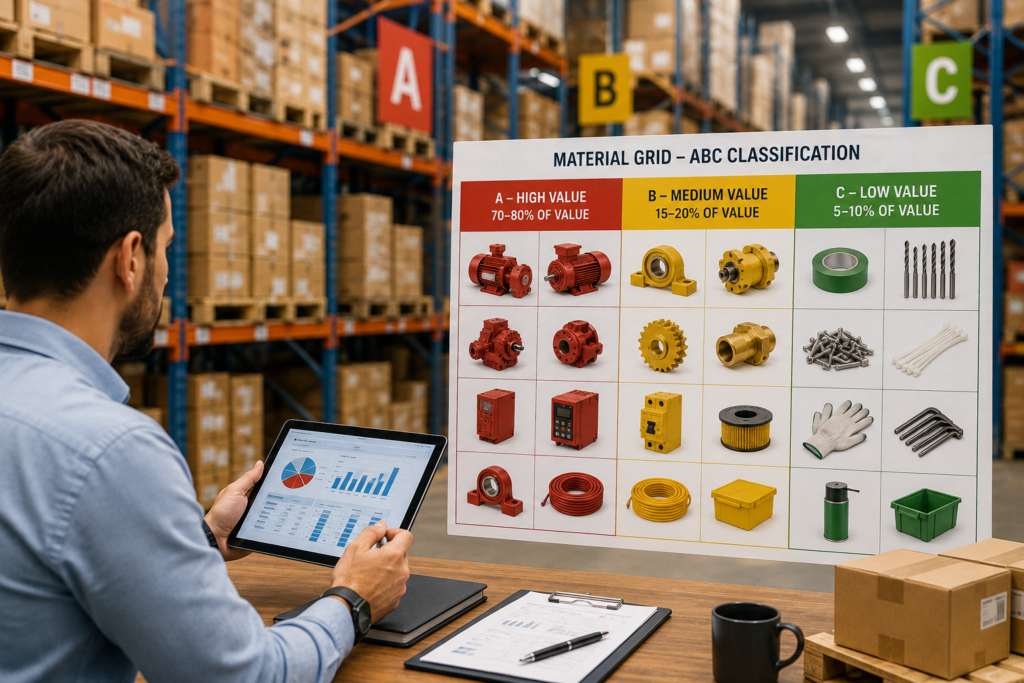
It is an inventory classification technique that categorizes stock items based on their annual consumption value.
Typically:
- A Items represent high-value inventory requiring close control.
- B Items represent medium-value inventory requiring moderate oversight.
- C Items represent low-value inventory requiring basic controls.
The objective is simple: focus management attention where it creates the greatest operational and financial impact.
Why ABC Analysis Matters
It is particularly valuable for growing SMEs because it helps allocate limited resources more effectively. Instead of treating every inventory item the same, businesses can focus their time, budget, and management effort on products that contribute the most to revenue, profitability, and operational continuity. Many organizations spend significant time counting low value items while overlooking the products that tie up most of their working capital.
Benefits of Analysis include:
- Better inventory visibility
- Improved cycle counting effectiveness
- Reduced carrying costs
- More accurate forecasting
- Improved purchasing decisions
Organizations that align inventory controls with inventory value often achieve stronger operational performance and inventory accuracy. ABC classes show which items deserve the best pick locations, as covered in Warehouse Layout & Slotting Strategies.
How to Perform ABC Classification
The process is straightforward:
Step 1: Calculate Annual Consumption Value. Annual Consumption Value = Annual Usage × Unit Cost
Step 2: Rank Items. Sort inventory from highest annual consumption value to lowest.
Step 3: Categorize Inventory. A common classification model is:
- A Items: Top 70–80% of inventory value
- B Items: Next 15–20%
- C Items: Remaining 5–10%
The exact percentages may vary depending on business requirements. You can use our Free ABC analysis tool.
Best Practices for Managing Each Category
A Items: These items require:
- Frequent cycle counts
- Tight purchasing controls
- Close supplier monitoring
- Accurate demand forecasting
B Items: These items benefit from:
- Monthly performance reviews
- Standard replenishment procedures
- Moderate safety stock controls
C Items: These items generally require:
- Simplified inventory controls
- Less frequent counting
- Bulk purchasing where appropriate
The goal is proportional management effort rather than identical treatment.
Technology and Inventory Classification
Modern ERP and inventory systems make ABC classification easier than ever.
SAP Inventory Management provides tools that help businesses classify inventory, improve stock visibility, and support informed replenishment decisions. Similarly, Oracle Inventory Management offers inventory classification, analytics, and planning capabilities that enable organizations to optimize inventory performance.
Solutions from SAP and Oracle provide inventory classification and reporting capabilities that help organizations maintain inventory visibility and improve planning decisions.
Technology supports the process, but inventory discipline remains the primary success factor.
Common ABC Classification Mistakes
Many SMEs make avoidable mistakes when implementing ABC Classification:
- Classifying inventory only once
- Ignoring demand changes
- Using cost alone without consumption value
- Applying identical replenishment policies across all categories
ABC Classification should be reviewed regularly to reflect changing business conditions and inventory demand patterns.
Need Help Improving Inventory Control?
Inventory optimization begins with understanding where your money is tied up. Safe Chain Solver helps organizations improve inventory visibility, strengthen warehouse controls, and implement practical inventory management systems that support sustainable business growth.
Conclusion
ABC Classification is one of the simplest and most effective inventory management techniques available. By focusing attention on the inventory items that matter most, SMEs can improve inventory accuracy, reduce costs, and make better operational decisions without increasing complexity.