Safechainsol.com
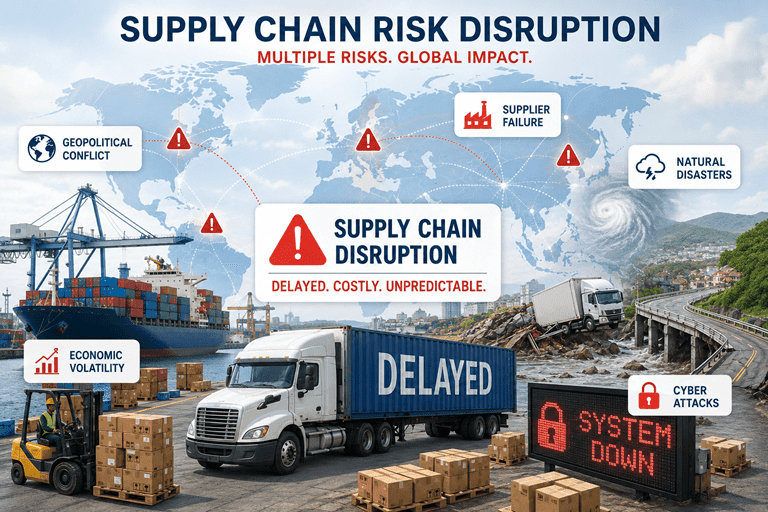
Introduction: Recent global disruptions have highlighted a critical reality, supply chains are only as strong as their weakest link. From geopolitical instability and transportation disruptions to supplier failures, cyber threats, and natural disasters, organizations face increasing risks that can significantly impact operations, customer service, and profitability. Managing supply chain vulnerabilities is no longer optional, it is a strategic business imperative.
Table of Contents
How Resilient Is Your Supply Chain?
Many supply chain risks remain hidden until they disrupt operations, delay deliveries, increase costs, or impact customer satisfaction. Organizations that proactively identify and address vulnerabilities are better positioned to maintain business continuity and respond effectively to unexpected events.
Safe Chain Solver helps organizations assess supply chain risks, identify operational vulnerabilities, and develop practical mitigation strategies that strengthen resilience and improve long-term performance.
Understanding Supply Chain Risk
Supply chain risk refers to any event or condition that disrupts the flow of materials, services, information, or products across the supply network. Fleet breakdowns and fuel waste are operational risks, see Preventive Maintenance & Fuel Monitoring for SME Fleets.
Common categories of supply chain risk include:
- Supplier Risk
- Transportation Risk
- Inventory Risk
- Regulatory and Compliance Risk
- Cybersecurity Risk
- Geopolitical Risk
- Environmental and Natural Disaster Risk
Not sure where your inventory risk sits? Use our free Inventory Accuracy Calculator and Reorder Point Calculator to identify gaps in minutes, at no cost.
Organizations that fail to identify and manage these risks often experience increased operational costs, service disruptions, and reduced competitiveness.
Why SC Business Continuity Matters
A resilient supply chain enables organizations to:
- Minimize operational downtime
- Protect customer service levels
- Reduce financial losses
- Improve business continuity
- Strengthen supplier relationships
- Respond more effectively to disruptions
In today’s volatile business environment, the ability to anticipate and timely mitigate risk has become a significant competitive advantage.
A Practical Approach to Supply Chain Risk Management
Effective risk management typically involves five key steps:
- Identifying critical supply chain vulnerabilities
- Assessing supplier and operational risks
- Prioritizing high-impact exposures
- Developing mitigation and contingency plans
- Monitoring and reviewing risks on an ongoing basis
Organizations that follow a structured approach are better equipped to reduce disruption and maintain operational stability.
5 Proven Supply Chain Risk Management Strategies:
1. Map Your Supply Chain
Many organizations have visibility into their direct suppliers but limited understanding of upstream dependencies. Mapping critical suppliers, materials, and logistics flows provides a foundation for effective risk assessment and contingency planning.
2. Diversify Suppliers
Over reliance on a single supplier or geographic region increases vulnerability. Strategic supplier diversification helps reduce dependency risks and improves supply continuity.
3. Establish Appropriate Safety Stock Policies
Maintaining appropriate inventory buffers can protect operations during temporary disruptions while balancing working capital requirements. Use our free Safety Stock Calculator to calculate the right inventory buffer for your business without tying up excess working capital.
4. Develop Business Continuity Plans
Organizations should establish clear response procedures before disruptions occur. Well defined contingency plans enable faster recovery and minimize operational impact.
5. Monitor Supplier Performance
Regularly track supplier performance indicators such as:
- Delivery reliability
- Product quality
- Financial stability
- Capacity constraints
- Compliance performance
Early identification of supplier issues enables proactive intervention. Track supplier delivery performance using our free OTIF Calculator (On Time In Full), the most important supplier KPI for Pakistani SMEs.
The Role of Technology in Supply Chain Risk Management
Modern supply chains increasingly rely on technology to improve visibility and responsiveness. Key capabilities include:
- Real time shipment visibility
- Predictive analytics
- Supplier performance dashboards
- Inventory optimization systems
- Risk monitoring tools
According to McKinsey, companies with advanced supply chain risk capabilities recover from disruptions significantly faster than those without.
The Role of Leadership
Disruption management is not solely a procurement responsibility. Effective risk management requires collaboration across:
- Operations
- Procurement
- Warehousing
- Logistics
- Finance
- Quality
- Executive Leadership
Organizations with strong cross-functional alignment are generally more successful in building resilient supply chains.
Supply Chain Risk Consulting for SMEs
Supply chain risk consulting helps SMEs identify vulnerabilities that can disrupt operations, increase costs, or affect customer service. A supply chain risk consultant evaluates areas such as supplier dependency, single-source risks, inventory vulnerabilities, procurement risks, logistics disruptions, critical-item exposure, business continuity gaps, and supplier contingency planning.
The objective is not simply to identify potential problems, but to understand their likelihood, business impact, and operational consequences. For example, excessive dependence on one supplier or limited availability of a critical component can create significant exposure if that source becomes unavailable.
Consulting provides a structured approach to identify, assess, prioritize, and mitigate supply chain risks. This may include developing alternative sourcing strategies, defining safety-stock requirements, strengthening supplier relationships, establishing contingency plans, and identifying critical items that require greater management attention.
For SMEs, proactive risk management can improve supply continuity, resilience, cost control, and decision-making, helping the business respond more effectively when unexpected disruptions occur.
Need an Independent Supply Chain Risk Assessment?
Many organizations recognize supply chain risks but struggle to determine where their greatest vulnerabilities exist. Safe Chain Solver helps businesses assess supply chain risks, evaluate supplier dependencies, identify operational weaknesses, and develop practical mitigation strategies that improve resilience and business continuity.
Strengthen Your Supply Chain Before the Next Disruption
Supply chain resilience is not about eliminating every risk. It is about understanding potential threats, prioritizing exposures, and developing effective response strategies. Organizations that invest in resilience are better prepared to protect customers, maintain operations, and adapt to changing market conditions.
Conclusion
Supply chain disruptions will continue to occur. The difference between successful organizations and struggling ones often lies in preparation, visibility, and resilience. By proactively identifying risks and implementing effective mitigation strategies, organizations can strengthen their supply chains, improve operational stability, and support sustainable business growth in an increasingly uncertain world.